Thursday, 5 January 2017

Wednesday, 4 January 2017
6 Tips to Improve Marketing Content and Engage Audience
Your amazing idea, concept, or product is irrelevant if nobody can find it. You may be offering something vital and life changing, but your potential success is limited unless people are finding your marketing content and engaging with it.
To increase this sort of audience engagement, you need to improve your content.
To that end, below are six pieces of advice on how to improve your content, which will help increase audience engagement and thus, attract more visitors to frequent your site and share your content.

Use SMART techniques
Increasing your audience can be a daunting task; however, it is less insurmountable when you follow the S.M.A.R.T method of planning.
S – Be specific. Growing your audience is a pretty big dream; how is the best way to do it? By increasing blog traffic, or having more names on your email list?
Pick an element that you feel will grow your website, and plan around that.
M – Make sure your target is measurable. Review your numbers as they stand, and decide on how much you want to improve by.
It may be doubling traffic or adding 1,000 names to an email list, but setting a line for what you want to achieve can help drive you, and be a great confidence boost when it’s actually accomplished
A – is for Actionable. Figure out the concrete steps to take to achieve your goal and put them into place.
This could be a change in marketing or an analysis of SEO keywords, but set the plan for how to meet your goals, then put that plan into place.
R – Be realistic. There is little point in setting goals you can’t meet, as you will be demoralized by the failure. Your goals should be inspirational without being impossible.
T – stands for Timely. Without a deadline to work against, it can be tough to measure our progress and evaluate the techniques you are using.
This short-term review can also be a great way to realize you’ve accomplished way more than you think, which can be motivation to carry on working.
Utilize Online Editing Resources
There are some really good resources for editing that are free online.
Pro Writing Aid is awesome for content writers looking for feedback on how to consistently improve, as it provides an analysis of your work, rather than just corrections.

You can see if you have a tendency to use overly long sentences, repeat the same words, or have plagiarized other work.
It’s a great way to become aware of mistakes you make and improve your future writing.
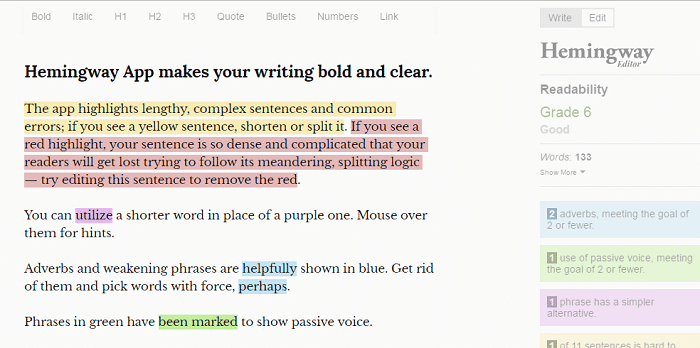
For clear and strong writing, the Hemingway App and Grammar Guide will let you know if you’ve included the passive voice, abundant adverbs, and other elements associated with weak writing.
Word Counter is a great tool for SEO analysis as it can provide you with your keyword frequency, making sure you have that 1 to 3 percent keyword frequency to improve your ranking with search engines.
Utilize Online Writing Sources
If writing isn’t your thing but you need a blog element or written content to drive traffic your way, then using freelance services to hire talented writers could save you a lot of time and energy.
Freelancers are also cost-effective and can provide a host of services.

People Per Hour provides services specifically for websites, from software to content.

Freelancer.com and Upwork.com, on the other hand, provide all kinds of freelancers from all over the world with various skillsets and levels of experience.
If you want to hire a high profile expert, then Toptal is where you should head to. For amazing written content, Rated Writing or UK Writings can offer writing services by qualified professionals.
This reduces the risk of poor quality writing affecting your search engine rankings or failing to engage your visitors.
Use Effective Marketing Tools
An emotive headline can attract and engage your audience, so make sure your title is as emotional as possible.
The Emotional Marketing Value Analyzer lets you check whether your headline uses the most emotional language possible.
Frequent content updates improve your SEO rankings and can, therefore, improve the traffic entering your site.
However, coming up with amazing topics day after day can be tough, which is where HubSpot Blog Topic Generator comes in.
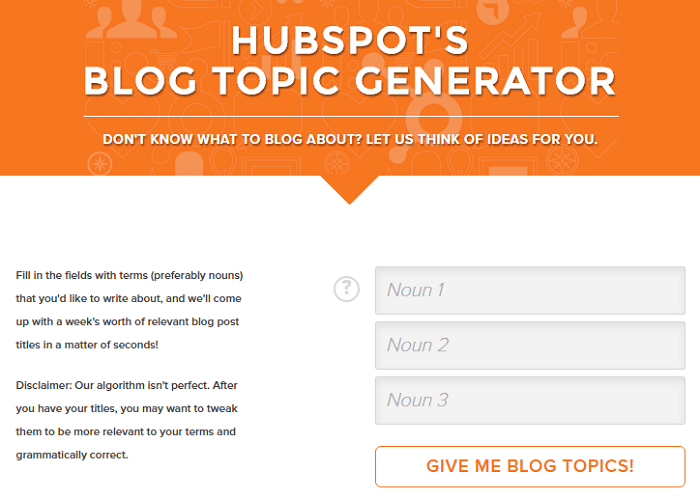
This tool can help you come up with fresh and interesting posts consistently.
Don’t Overlook Outside Sources
While your content should be original, including some quotes from experts, as well as inserting graphs and data can illustrate your point and make you appear more reliable.
People are skeptical of fake internet articles, so backing up your points with expert comments and data makes your audience more likely to believe in, and share your content.
Sourcing these quotes before you begin writing can also simplify the process as you suddenly have a starting point you can focus on.
External links that back up your assertions can also be a huge plus for SEO rankings. You can always make your readers promote your content, too.
Use Images and Infographics
Using examples throughout your work helps appeal to readers, as it gives them an opportunity to really see what you mean, and understand how your points make sense.
One of the best ways to give these examples is through images. Images can break up your content and make your page more attractive.
They’re also useful in terms of breaking down complex information into digestible illustrations.
Many images, such as pie charts or Venn diagrams, are really easy to DIY and are beneficial for elucidating a topic for your readers.
Final Words
Utilizing all of these tips consistently and effectively can really work wonders in driving traffic to your site, and once a visitor is there, these tools will engage them, encouraging them to share the content or return at a later date.
It is essential to maximize the benefits of an online presence, and following these tips will help you to do that.
Sharon Conwell has been a content manager and ghost writer at over 20 online projects, now she is a part-time educator and an editor at Big Assignments. She’s specializing at content creation and optimization. She loves coffee, tulips and her Shih Tzu named Bobby.
The post 6 Tips to Improve Marketing Content and Engage Audience appeared first on Ninja Outreach.
source https://ninjaoutreach.com/improve-marketing-content/
Tuesday, 3 January 2017
#SproutChat Calendar: Upcoming Topics for January 2017
Cheers to 2017! We’re excited to get this year started with #SproutChat. Check out the topics for January and join in on the conversation on Twitter. Simply follow the hashtag every Wednesday from 2—3 p.m. CST to engage with Team Sprout and our broader Sprout Community.
Join our Facebook community for weekly notifications or take note on the topics and dates below.
January 4, 2017: Maintaining a Social Media CRM
Sprout Product Focus: Social CRM
Organizing and keeping track of community members across social networks can be incredibly overwhelming. Building meaningful relationships with a brand’s online community is dependent on maintaining an organized social media CRM. This week’s #SproutChat will focus on Sprout Social’s CRM features. We’ll discuss tips and tricks for referencing past conversations and dive deeper into how a social CRM can help your team reach its 2017 business goals.
January 11, 2017: Social Media Trends for 2017
New Year, new trends! Think live video is going to be the biggest hit? Where will Snapchat go? Will Twitter launch new features to re–engage users? We’ll pull out our crystal ball and talk social media marketing predictions for 2017. In addition to predicting trends, we’ll be chatting with our community to learn where they’ll be allocating more time this calendar year and what tactics they’re leaving behind.
January 18, 2017: Travel Industry Content With #SproutAllStar Keri Jaehnig
This week we’ll talk social content creation for the travel and hospitality industry with Sprout All Star, Keri Jaehnig.
Keri currently works in online marketing but has spent several years in international educational travel leading tours for Smithsonian Student Travel. She has won several state tourism awards for her social media campaigns and will be sharing her best practices for making travel content work for your brand.
January 25, 2017: Motivating Co-workers to Submit UGC
Behind the scenes content is becoming an increasingly larger component of many brand social strategies. For social teams of any size, it can be challenging to try and document the many perspectives of various teams and functions.
One solution? Directly request social content from employees. During this #SproutChat, we’ll discuss best practices for getting user-generated content that maintains an authentic, insider quality and accurately depicts the many sides of your business.
This post #SproutChat Calendar: Upcoming Topics for January 2017 originally appeared on Sprout Social.
source http://sproutsocial.com/insights/sproutchat-calendar-january-2017/
Who, What, Where, When, Why, How: A Social Media Primer
The number of followers on your company’s social media profiles is low. Double-digits, if that. Each post gets just a comment or two—barely enough to call it customer engagement. The only shares are from the company’s other profiles—none of them organic. To help fix this, let’s take a look at the what, why, how, when, and even the who of blogging for niches in order to attract customers for engagement and eventual conversion.

What to start with
Before answering any of the other questions, you need to have a base foundation for social media, and where links on social media point back to.
Having a blog is the most important part of starting down the road to customer engagement. Regardless of your company’s niche, there is always news affecting your company, your niche, or your customers—perfect fodder for a blog post.
The key is showing your expertise on the field to impress your potential clients, and to give them valuable information. You can do this by writing about news in your niche, market trends, other new products to impress potential clients, and by providing valuable information.
Have an opinion on the news? That’s perfect for a blog post. For more on this, see points 2 and 3.
Why bother posting?
The time stamps on your posts show gaps of weeks and even months. The front page of the blog is often stagnant—the same image dominating the screen. The University of Alabama at Birmingham Collat School of Business notes business owners don’t publish blogs or post to social media because they are just too busy. Time is money, and they are afraid it will take too much time to develop and write a post.
But not posting means not tapping into a significant portion of the population. In a study conducted earlier this year, 68 percent of adults were found to have a social media account, and 79 percent of those had a Facebook account.
Even those 65 and older are using social media, with 62 percent using Facebook—up 14 points from 2015. A third of all adults use Instagram. Meanwhile, companies that used social media frequently in 2015 had 434 percent more indexed pages on Google than those that eschewed posting.
So if you want your company to be found in a Google search, having indexed pages that provide relevant and insightful information is a great way to rise in rankings.
Who is Vilfredo Pareto?
- Here’s a post about my new product.
- Did you know I offer this service for my customers?
- I wrote a press release about my fancy new product!
If your blog topics read like any of those, you are posting far too many self-promotional blogs.
While you are posting often, the content is doing more to harm your brand, and likely driving frustrated readers away as they see right through your promotional tactics.
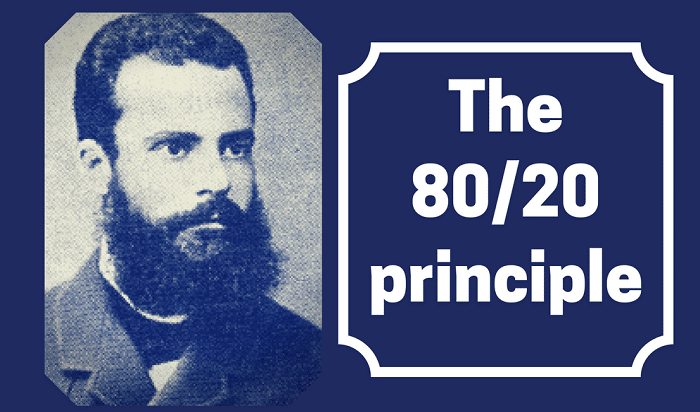
Your posts should follow Italian economist Vilfredo Pareto’s Principle of 80/20. It’s applicable to many contexts.
Pareto found that 80 percent of Italy was owned by 20 percent of the population in the late 1800s, and 20 percent of peapods in his garden had 80 percent of the peas.
In social media, it can be the proportion of non-promotional to self-promotional posts. The 80 percent should focus on engaging your audience, inviting comments, offering insight and information, and overall should encourage shares, thus spreading your company name.
Some real-world examples
Imagine you run the blog and social media for a small real estate office. You want to link to valuable content that your readers will find helpful, such as a visual guide to what fits in a storage unit.
By writing a post about storage, and linking to that guide, you provide information a family moving could need. Since their friends might find it useful, they post it to Facebook.
Another site might try to provide comprehensive information on investing in real estate, to try to answer any question a customer might have.
The key takeaway is to post something interesting or something a potential customer can learn from. Eager to share what they have learned, they will in turn post on social media. Moz, a well-known search engine optimization company, dubbed this the “BuzzFeed Approach.”
How the pros do it
Here’s another real-world example, this time from a major corporation: Square, maker of point-of-sale machines, doesn’t just post about their machines. One post offers advice about having tough conversations with employees and doesn’t mention their product at all.
The goal is to relate whatever you post to your niche. Square posts not just about credit card studies, but how to manage a company. Their users are offered actionable advice, which they can in turn share. This works as an indirect promotion, encouraging engagement with those that have used the tips—whether they were successful or not, opening up a conversation.
Going back to Pareto, you still have the remaining 20 percent of posts. Through those, you can directly promote your product, service, coupon, or event. Use these posts to link to other parts of your site and help increase search engine optimization.
A company that sells phones for businesses, for example, might write a blog post on what phones are best for different sizes of conference rooms, linking to product pages from the blog. It’s still helpful information for business owners and is shareable, but it also promotes their products.
How to beat writer’s block
You’re convinced. You’re ready to sit down and write a blog, but don’t have a solid idea of what you want to write about.
You remember a funny quote that relates to your niche, and you have a few pieces of advice to share. But you want something more, something that has a high chance of engaging readers and drawing more in. Dig deep: what do your current followers already like to share?
Rand Fishkin from Moz suggests using social media to research customer needs or profiles. This is how you fuel ideas for content creation, and this can also reveal patterns in customers. What trends do they follow? Are your customers more inclined to follow one media outlet over another, or use certain products?
Leverage this information to create content catered towards those groups. Focusing on what they already respond positively to will increase chances of them sharing the content. Friends then see the content, and in turn, share, creating a chain of shares and thus accomplishing your goal.
Where to post
You have your content idea ready to go, based on research on customers and your niche. The next part of posting is knowing the type of web content your audience wants; in other words, where to post your content.
- Is your content best suited for a text post on your blog?
- An infographic posted to Twitter?
- A longer how-to video on YouTube?
- A fun, short video on Instagram?
If you weren’t able to find this in your previous research, go back and do more. Or, take a look at successful competitors: what type of media are they posting? Build upon their idea, improve upon their content with your own and watch as readers switch to your better content.
It’s time for another example of a major company. Red Bull drinkers enjoy images and videos of extreme sports, like this video on Instagram that combines surfing, zip lining, and BASE jumping. It’s fun, unusual, new, and most importantly, it’s a video instead of an image, which would not capture the audience and convey the craziness of the stunt. That post, only a week old as of this writing, has nearly a million views and almost 6,000 comments—and the Red Bull logo is nowhere to be seen.
When to post for maximum engagement
The time of day you post your content can have a significant impact on engagement.
According to SEO guru Neil Patel’s research, posting content onspecific times via specific social media platforms results in more shares and higher traffic back to your site (likely your blog).
He also found that:
- Fortune 500 companies posting videos on Instagram during local working hours gained an average of 22.5 per 1,000 followers interacting with the videos.
- After working hours, the number jumped to 33.4.
This shouldn’t come as a surprise—people are usually more active on social media when they are at home rather than while at work.

Using Patel’s research, let’s look at a specific niche: fashion. A clothing-related pin on Pinterest around 3 p.m. on Fridays results in the best engagement. This is before the weekend begins, but there’s still enough time to plan an outfit for a Friday night date.
At a 10,000-foot view, nearly all industries see more shares and comments on Facebook posts that go live near the end of the week.
Patel performed an experiment, following his own advice, specifically timing posts to his blog.
The result: a 39 percent increase in web traffic. Programs such as Buffer or Hootsuite allow you to time your posts like Patel, creating a schedule and automatically posting.
Key Takeaways
So, answering the what, when, why, how—and even who—does significantly improve your social media presence. It can also improve engagement and, in time, your conversions.
You’ll earn followers, each awaiting your next informative post, with posts about your services or product. You’ll see increased comments on your blogs, customers taking part in contests, or volunteering their own stories and advice, and your business will grow.
The post Who, What, Where, When, Why, How: A Social Media Primer appeared first on Ninja Outreach.
source https://ninjaoutreach.com/when-why-how-social-media/
Thursday, 29 December 2016
Content is The King but SEO is The Messanger
In today's world, 72 percent of all marketers have a content marketing strategy in place, according to the LinkedIn Technology Marketing Community.
Meanwhile, Curata reports that by the end of next year, more than half of all companies will have an executive who is directly responsible for their overall content marketing strategy.
The popularity of on-site content marketing is easy to explain.
Audiences have become more cynical towards traditional advertising, email opening rates are historically low and there is an increase in the number of people using ad blockers.
Yet, this popularity means there is a huge amount of competition for an audience.
When it comes to building an audience via content and social marketing, your position on results pages of search engines should also be an essential ingredient of your strategy.
So what are the latest best practice action points that you, and your search marketing agency, should implement in order to optimize your website content to outrank competitors?
Aim to Please Your Readers
All good SEO consultants will tell you that, more than anything else, the success of your content marketing strategy will depend on the quality of the content itself.
If you are going to attract an audience, build trust and influence readers to engage further with your brand, your content needs to be engaging, useful, and well-written.
In addition to helping to organically build an audience, producing quality content impacts upon search engine rankings.
If the title is well researched, resonates with your audience’s interests or problems and includes your targeted SEO terms, the number of clicks it receives will increase.
If the content is helpful, fun, or solves some of your audience’s FAQs for instance, users are less likely to bounce back off the page and onto another search result.
Both of these things, as well as bounce rate, will influence rankings.

Study Reader Behavior and Adjust Accordingly
Furthermore, despite the popularity of content marketing, a lot of the content companies produce is actually poor in quality.
In fact, according to NewsCred, the medium time spent reading a piece of content marketing is just 37 seconds.
Therefore, by only publishing well-researched, quality content, you can stand out from the pack.
The focus should be on quality and substance rather than creating too many website pages with low-value content.
From a tactical point of view, it is good practice to do a review of your web pages every six months and check landing pages with the highest bounce rate, exit rate, the highest number of page views, errors, and conversions if relevant.
You will probably end up with a number of pages that are low in traffic and performance, which you might then decide to either kill or optimize.
Think of it as a good spring clean that will improve the overall user experience as well as your website crawling and indexing.
Content Is King, but SEO Is the Messenger
Of course, while most experts agree that content is king, without employing some basic SEO techniques, even high-quality content can be painfully slow to attract an audience, making it poor as a marketin+g tool.
Whether you decide to work with a search marketing agency or go it alone, there are some best practices that can help you out.
One of the most important aspects of search engine optimization is keyword research. The goal here is to find search terms that people may enter into Google or Bing when looking for content like yours.
Ideally, one or two key phrases should be chosen and inserted sparingly into a piece of content, its title, URL, image data and meta description.
Don’t Overstuff with Keywords; Remember to Write for Humans
However, think of your landing page from a topic point of view rather than obsessing too much about keywords. Ideally, each page needs to shout about a specific topic (i.e. service, product or information) so that search engine crawlers can understand straight away what the page is about in order to index it correctly.
I always come across companies and brands who try to fit a bunch of services or information on one page, which not only makes it very hard for search engines to understand and index, but also confuses users as to what the content is about.
This results in high bounce rates, exit rates and less of a chance to rank on search engines.

Moreover, your website content should be optimized for mobile devices, should include a combination of text and images, and should contain links to both internal and external pages.
Using relevant links to other pages on your site can help to keep your audience engaged, while simultaneously influencing your rankings positively.
Provide Unique Value
The final step to outranking your competitors on sites like Google is to provide unique value to your audience. This may require you and your SEO consultants to do some market research.
It may be that you have access to unique data or can format it in a unique way. Maybe you have a unique perspective, which challenges established ideas.
In some cases, the unique value you offer may just be the pure quality of the content itself.
Whatever the case may be, setting yourself apart from everyone else is a great way to ensure your content outranks your rivals, attracts a larger audience and ultimately encourages readers to do what you want them to do.
"Now that you have this competitive advantage, in terms of the content... you can assemble this stuff in formats that other people don't or won't create," says Rand Fishkin from Moz.com. "
That could be things like guides that require extraordinary amounts of work, [or] highly customized formats that have unique interactive or visual components."
Parting Advice
To conclude, remember that all pages are not created equal. Think of the key pages on your website that need to work harder and contribute to your business’ goals. These are the ones you should start optimizing first, especially if you are low on resources and time (who isn’t!).
These landing pages should have great content components that resonate with your audiences (and ideally solve their problems) such as engaging text content, downloadable guides, infographics or fun tools, strong visuals, possible a video and second to none call to actions and links.
This optimization exercise takes time and real effort, but it will be highly rewarding if you get it right and your pages end up above your competitors’ in search engine result pages.
Christelle Macri is the founder of Ebizpromotion, a leading SEO agency in Berkshire, with a no-nonsense and ethical approach to digital marketing. She is also search engine consultant with over 17 years’ experience in the internet advertising industry. Having worked for a major search engine and pioneering pay for performance advertising networks, she is an expert at turning her clients’ websites into consistent revenue streams, using a variety of digital channels. Feel free to connect with her on Twitter.
The post Content is The King but SEO is The Messanger appeared first on Ninja Outreach.
source https://ninjaoutreach.com/content-king-and-seo-messanger/