Thursday, 15 December 2016

10 Book Recommendations From Team Sprout

Here at Sprout Social, reading really is fundamental. Good books teach us about our craft, inspire us to be better leaders and even allow us to fall into escapist fantasies during our cold winter commutes.

As 2016 draws to a close we asked members of Team Sprout to share the best things they’ve read this year. Here are some of their top picks in engineering as well as a few fiction and nonfiction options to mix things up. If you’re looking for a good travel read this holiday season, these are all fantastic choices.

Our Engineering Picks

1. “The C Programming Language” by Brian W. Kernighan and Dennis M. Ritchie

“The C Programming Language” is one of the few programming books that not only offers valuable and practical information but is enjoyable to read. While it focuses on the C language, it outlines useful concepts and design patterns for any programmer looking to build well-architected, efficient programs. This book does assume some familiarity with basic programming concepts but even novice programmers should be able to pick up and follow along.

About the Authors: Brian Kernighan is a computer science Professor at Princeton University. He has contributed to the development of Unix and coauthored the AWK and AMPL programming languages. Dennis M. Ritchie was the computer scientist responsible for creating the C programming language and was also a key contributor to Unix. Guess you could say he wrote the book on C.

Recommended by Colin, Senior Software Engineer

2. “Eloquent Javascript” (2nd Edition) by Marijn Haverbeke

Javascript is the backbone of modern web development and it’s increasingly important to do it well. “Eloquent Javascript” is a thin volume that distills Javascript’s beauty and efficiency and serves as a great introduction to the language that can really make core programming concepts click. “Eloquent Javascript” provides a grok-able and inspiring entry point for new developers.

About the Author: Marijn Haverbeke is a software developer and blogger based out of Berlin.

Recommended by Chris, Senior Software Engineer

3. “The Idea Factory” by Jon Gertner

“The Idea Factory” isn’t, strictly speaking, a programming book, but it’s a fascinating read about the history of innovation through the 20th century. “The Idea Factory” explores how engineering and technical innovation revolutionized communication and ushered in the Information Age. Countless aspects of modern life have been invisibly influenced by the innovations at Bell Labs, and this fascinating history sheds some light on how much the world has changed as a result.

About the Author: Jon Gertner is an editor and technology writer at Fast Company magazine. Previously, he worked as a science, business, and economics writer at New York Times Magazine. “The Idea Factory” is his first book.

Recommended by Dan, Software Engineer

4. “Extreme Programming Explained” by Kent Beck

“Extreme Programming Explained” is a thorough but quick introduction to the XP management philosophy and walkthrough of how to involve the whole team to get buy in on said philosophy. Testing, agile business practices and TDD are buzzwords that get thrown around a lot in development circles, but “EPE” breathes new life into those concepts and reminds us why we need to be intentional about our processes and team dynamics. The examples are direct, simple, and easy to apply to day-to-day work. Even if you don’t subscribe to all of the tenets of XP, reading “EPE” is a worthwhile exercise in checking your processes as a team.

About the Author: Kent Beck is a software engineer, the creator of the extreme programming methodology, and one of the original signatories of the Agile Manifesto.

Recommended by Shane, Software Engineer

5. “Professor Frisby’s Mostly Adequate Guide to Functional Programming” by Brian Lonsdorf

Earlier this year Sprout’s Javascript Guild read and discussed this book as a group. It helped the team start understanding and implementing functional programming concepts in their day-to-day work. It’s an engaging and practical read that’s immediately applicable for Javascript development that is also a great first pick for a team book club or professional development side session.

About the Author: Brian Lonsdorf writes about Javascript and functional programming online. You can find his book on gitbooks and other writings on his profile at Medium.

Recommended by the Sprout Social Javascript Guild

Our Fiction Picks

1. “Station Eleven” by Emily St. John Mandel

“Station Eleven” is the most inspiring and heartbreaking story about the aftermath of the apocalypse you’ll read this year. It won the Arthur C. Clark Award for Best Novel in 2015 and was the champion of the 2015 Tournament of Books.

After a mysterious plague brings society to its knees, people find a way to soldier on. A group of traveling actors and musicians called the Traveling Symphony tours the scattered enclaves of North America, bringing entertainment and news of other settlements to these isolated communities. This book reminds us that we create art and meaning, even after the apocalypse, “because survival is insufficient.”

Recommended by Chris, Senior Software Engineer, and Jess, Software Engineer

2. “The Hollows” series by Kim Harrison

“The Hollows” follows Rachel Morgan, a heroine with an absurd knack for finding herself in trouble. It’s an Urban Fantasy series with tons of detective work, romantic entanglements, character development and soul-searching. And vampires. Because who doesn’t love a good vampire series?

Recommended by Matt, Software Engineer on Bambu by Sprout Social

3. “Americanah” by Chimamanda Ngozi Adichie

“Americanah” is a stunning piece of contemporary literary fiction. It spans three continents as it examines the most complex themes of life in today’s globalized world, from love and relationships to race and identity. And it’s not just us who were moved by this powerful exploration of life and love: Americanah won the Chicago Tribune Heartland Prize for Fiction and the National Book Critics Circle Award for Fiction. It was also nominated or shortlisted for the International IMPAC Dublin Literary Award, the Women’s Prize for Fiction, the Andrew Carnegie Medal for Fiction and the Goodreads Choice Award.

Recommended by Alicia, Brand Marketing Specialist, and Shane, Software Engineer

Our Nonfiction Picks

1. “Extreme Ownership: How U.S. Navy SEALs Lead and Win” by Jocko Willink

A copy of “Extreme Ownership” has been steadily making its way around the engineering and product teams here at Sprout. Contrary to what the title might imply, this is not a book about the military—it’s a leadership handbook grounded in the lived experiences of Navy SEALs. “Extreme Ownership” has a lot of inspiration to offer about mission, team collaboration, and communication. Willink takes these lessons from the military and makes them applicable in everyday professional and personal settings.

Recommended by Anjali, Product Manager

2. “The Signal and the Noise” by Nate Silver

Nate Silver has been a strong voice in predictions and betting markets for political races and sports for nearly a decade. “The Signal and the Noise” pulls back the veil and lets us see into the process that Silver uses to distinguish truths in a sea of noise. These insights are fascinating and essential reading for anyone interested in the processes involved in Data Science.

Recommended by Greg, Data Science Lead

Bonus Recommendations: Podcasts

1. ‘99% Invisible’ from Radiotopia

‘99% Invisible’ is a show about the unseen thoughts, decisions and labor that shape the way we live our lives. Each episode takes a deep dive into a topic that invisibly influences the world. They’ve done collaborations with other audio productions like Planet Money and DecodeDC, and are one of the most popular podcasts available on iTunes.

Recommended by Alicia, Brand Marketing Specialist, and Shane, Software Engineer

2. ‘Reply All’ from Gimlet Media

It’s a show that’s all about…the internet! PJ Vogt and Alex Goldman take deep dives into everything from memes and internet arcana, to why Google Adwords support techs hate dealing with locksmiths. If you spend time online and don’t quite understand why the Internet is so weird, ‘Reply All’ will help you figure it out.

Recommended by Laura, Lead Visual Designer, and Jess and Shane, Software Engineers

This post 10 Book Recommendations From Team Sprout originally appeared on Sprout Social.


source http://sproutsocial.com/insights/book-recommendations-from-sprout/

How Team Sprout Uses Its LinkedIn Company Pages Report

Wednesday, 14 December 2016

2 Great Ways to Build Your Brand Identity on LinkedIn

Unless you are an Arctic explorer, rattlesnake handler or some other exotic professional, more than likely you face a lot of competition in your business.

You can build your brand identity through LinkedIn, the world’s largest professional network with more than 467 million members in 200 countries.

Your brand identity helps separate you from your competition and gives people good reasons to hire you or buy your products, books or services.

Building your brand is one of the key benefits of social media today.

Here are 2 great ways to build your brand identity through LinkedIn:

  1. Publish your blog on LinkedIn. Even if you have managed to build a rather large readership for your website, LinkedIn will provide an even bigger audience for your articles. On your LinkedIn profile, you will find a place to post your articles. When you publish on your website – and here at www.whatissocialmediatoday.com we recommend you blog at least once a week to build your brand identity – copy and paste your article over onto your LinkedIn profile. Experts believe that publishing on LinkedIn is one of the most effective ways to generate more traffic from social media. Keep your LinkedIn articles to no more than 1,000 words. Use a photo that helps tell your story. Include a call to action at the end of your article that attracts new customers to your business, products books and services.
  2. Create a side presentation to share useful information, establish yourself as an expert and publish on Slideshare.net, the slide sharing feature of LinkedIn. Use applications such as Microsoft PowerPoint or Keynote for Apple products to create a slide show. Be sure to use visual images to tell your story. Include your website address and a call to action. Why bother? Because 70 million professionals use  Slideshare.net to educate themselves on all kinds of topics. Once again, you establish yourself as an expert by sharing your knowledge and teaching what you know. Here’s a simple example of a slide show I created. Not only did I share succinct and useful information, I also shared butterfly and orchid photos that have become a recognizable and integral aspect of my personal brand.

Many entrepreneurs who are not looking for a job overlook the social media benefits of LinkedIn.

Even if you don’t need to use LinkedIn as an online resume to find yourself a new position, you can use this platform to establish yourself as an authority in your field.

There are 128 million LinkedIn members in the U.S. and 70 percent of its members are outside the U.S.

By sharing your articles and slide shows on LinkedIn, you can establish yourself as a worldwide expert in your field.

When you establish your profile, be sure to add a good headshot as a good professional photo makes you 14 times more likely to be found.

Want to learn more about how you can Win the Game of Social Media?

Putting all this together takes time and is part of creating a successful social media strategy.

Join Catherine Carrigan and Ramajon Cogan at www.whatissocialmediatoday.com and we will show you how! Call Catherine Carrigan today at 678-612-8816 or email catherine@catherinecarrigan.com or contact Ramajon Cogan at (928) 821-4553 or email wheresramajon@gmail.com.


The post 2 Great Ways to Build Your Brand Identity on LinkedIn appeared first on What is Social Media Today.


source http://whatissocialmediatoday.com/2-great-ways-build-brand-identity-linkedin/

source http://whatissocialmediatoday.blogspot.com/2016/12/2-great-ways-to-build-your-brand.html

How Responsive Web Design Helps you get More Business

It’s a mobile-first world in B2B and B2C industries alike. If your website isn’t optimized for web – you could be missing a huge potential outreach for your business.

In fact according to Search Engine Land, mobile now represents 65% of all digital media time. That’s more than half, yet many marketers still prioritize their desktop strategy.

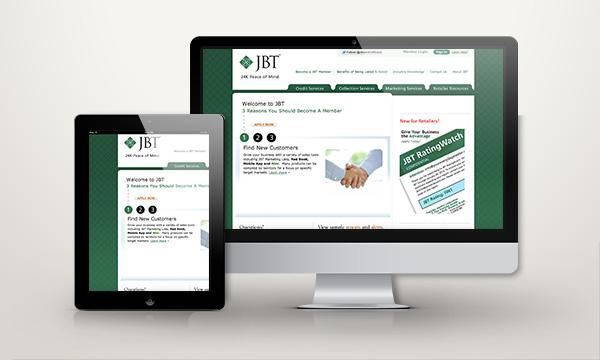
Here’s how a responsive web design helps you get more business leads through your web presence made available across whatever device your users may be coming from.

When any company is developing a website they must constantly remind themselves that first impressions matter immensely. 38% of people stop engaging with a website just because the content or layout is unattractive.

Time is precious, and people don’t want to waste their time with something that isn’t appealing.

With the percentage of searches starting on mobile devices, a responsive web design that is optimized for multiple platform viewing is extremely important.

Imagine yourself on your tablet trying to view a link from an email only to have that website distorted and lacking any real structure.


Now, you could easily go back and check that same link on your personal desktop but the damage is already done and this site has left you with a bad taste in your mouth.

This is seen countless times, and many companies are losing potential business because of their inadequate website design.

Instead, responsive design focuses on the user experience across platforms, and ultimately generate business. A site that’s easy to navigate can be the make or break of a sale.

Here’s how responsive web design helps you generate a higher number of conversions from your traffic, generating more business leads.

What Is Responsive Web Design and How Does it Help?

  • Website integrated with a fluid experience over multiple devices
  • Optimization for SEO, traffic and overall user experience
  • Demonstration of an active online presence

The first benefit of responsive web design is that people will have a seamless user experience on whatever device they enjoy using most.

Whether it is their mobile phone, a table or their desktop, you can expect that users will find the information they want without any disturbance in their user journey.

This comes to play in the user interface design, and it is also one of the most important elements of responsive design.

In today’s world, many people are using multiple devices, and while your site may have been created for a desktop, you cannot rule out access by smartphones or other devices.

According to Statista, there are roughly 207 million smartphone users and that number is to set to rise dramatically in the next few years. Search engines, such as Google, are also noting this rise and are setting up guidelines for websites to take in order to be included in mobile searches.

This willingness to change will be highly noted by Google and will also benefit your SEO. This will also generate traffic for your site and ultimately bring new leads.

All search engines want to see that you have a solid online presence and are considered an authority in your industry.
This is partly determined by the experience provided for the average user.

As important as it is to have a blog with bountiful content and an active role on multiple social media platforms, you have to assume that the first prospect users will click is your actual website.
In the past, many if not all websites were fairly difficult to navigate.

There were links that went nowhere, outdated content that was front and center and a lack of direct contact with the company.

Now, each of these elements must be clear and focused with the objective of guiding the user seamlessly through the ideal user journey. By updating and reformatting your site, you are telling users that you are committed to creating an experience that is streamlined and memorable.

This in turn will make them want to go back, refer you and bring in new leads.

Finding What Works

  • See what other websites are doing
  • Test out layouts and form placement
  • Experiment with details

A great way to see what is working is by referencing some success stories in the user journey.
There is no shame in finding inspiration and many firms do this by simply viewing what others are doing. Find companies that are similar to yours and really dig deep into their sites.

Better yet, see what they are doing for mobile devices as well. You may be surprised by what you will find works and what you believe can be worked on.

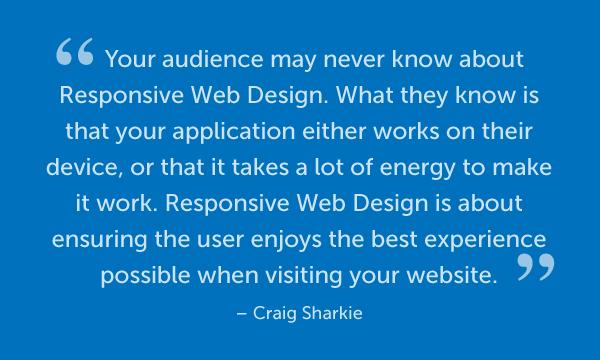
Industry experts Craig Sharkie and Andrew Fisher (authors of JumpStart Responsive Web Design) recommend using tools such as Responsinator to get an immediate view of how your website may look on various devices.

A cohesive, intuitive user experience (UX) also helps convert traffic to leads. From leveraging white space to using attractive calls to action, there are several areas that can be improved to increase your site’s return. Check out this guide from Hubspot with tips on how to improve your site’s UX.

After looking at what others are doing and reflecting on your own analytics, the next step is to create.

Check to see if all links are properly working and if there are any external links opening new tabs in your web browser. Keep in mind that a responsive web design should keep users on site in order to generate leads.

Responsinator and Google’s own PageSpeed are excellent tools to measure your web site’s responsiveness.

Benefits of Responsive Web Design

Statistics show these changes are necessary as a more streamlined website increases traffic, engagement, contact – and eventually leads. Having your website optimized for multiple channels allows users from desktop, mobile, and tablets to all experience a similar journey on site.

With the UX optimized on all platforms, a business can maximize the lead generation from each location potential buyers may be coming from.

Benefits from responsive web design include:

  • Increased Traffic
  • Increased Business Leads
  • Increased Sales and Revenue
  • Ideal, Quality User Experience
  • Improved User Journey
  • Brand Consistency Across Multi-platforms
  • SEO Compatibility
  • Higher Rank in Search Results (SERP)
  • Cost Efficiency
  • Ease of Site Management
  • On-the-go Access

Google’s algorithms favor responsive websites. You can learn more about the update on Google’s blog.
With search being a leading source of organic traffic, it’s important to play ball with Google to get placed higher in search results (SERP).

A higher placement in the results for search keywords closely related to your industry has a direct correlation with increased traffic. Put simply by Moz, “the more traffic a site received, the higher it tended to rank.

Higher targeted traffic increases potential business leads, and leads to conversion. Therefore, a higher SERP on targeted keywords will help you generate more leads, and a responsive web design is one way to help achieve that higher placement.

A responsive web design can bring the results you want, but first you must be willing to view your page critically and adapt to user trends. These are the first and lasting impressions for many, if not all, users that will come in contact with you and your brand.

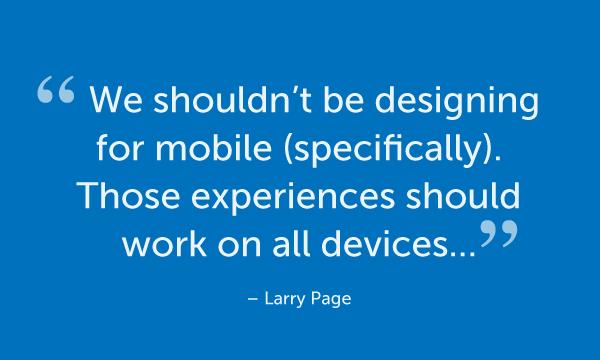
And while it is a mobile-first world, multi-device is the keyword of our user experience era. Just take it from Larry Page, Co-Founder of Google.

Customers can easily note passion, and they can detect laziness even quicker. Whether they were referred to you by someone or found you through a search engine, the very first impression of your company will be devotion or apathy.

Obtaining new leads may seem like a herculean task, but the path to new customers starts with creating a path that they can easily find and follow, no matter the device they’re coming from.


Edward is the writer and digital analyst at Digital marketing agency Aumcore. He helps business owners improve website visibility on mobile devices and increase conversion rates through Mobile SEO strategy.

The post How Responsive Web Design Helps you get More Business appeared first on Ninja Outreach.


source https://ninjaoutreach.com/responsive-design-more-business/

The Modern Guide to Social Media for Retail

Tuesday, 13 December 2016

How to Measure Social Media Success for Your Brand

3 Things Marketers Should Learn from Salespeople

Microsoft vs. Apple. Montagues vs. Capulets. Star Wars vs. Star Trek

Of all the world’s great rivalries, few can match the war that often unfurls between the sales and marketing departments.

Yet although both teams fight over access to customers and credit for conversion rates, they essentially have the same aim: to grow the business and the bottom line by winning new customers.

Indeed, the best marketers and salespeople have highly similar skills and traits: they know how to hold attention, how to make a product desirable, and how to reach the right people at the right time.

Aspiring executives in both departments, therefore, should put down their metaphorical weapons, and learn the tricks of the other side’s trade:

What Marketers Should Learn from Salespeople:

1. It’s All About That Personal Connection

Personalized marketing may seem like the latest talking-shop trend, but 7 in 10 marketers still don’t so much as customize their emails. Ask any decent salesperson if s/he would do the same, and they’d be aghast.

Salespeople know that business is built on rapport and relationships, and these are developed through creating a personalized connection with potential purchasers.

Smart salespeople always address their clients by name, remember and regurgitate any information they glean from them, and take the time to source and research relevant targets to improve their conversion rate.

Marketers may not have one-on-one conversations with customers, but they can emulate the appearance of one. Adding a customer’s name into an email or other communication is easy with modern software, and results in a 29% higher open rate and a 41% higher click through rate.

Implementing a campaign which sends customers an offer on their birthday generates a 250% higher revenue rate than generic deals.

Good salespeople use the knowledge they have of a client to tailor their offerings to them. Marketers should be doing the same, because getting it wrong loses customers.

In one survey, half of consumers said they would exit a website which showed them the wrong gender’s clothing. Investing in good algorithms would avoid such customer-losing mistakes.

2. The Importance of Identifying Customer Drivers

If your impression of a salesperson is an ice-seller to the Eskimos who never hangs up the phone until their client ‘buys or dies’, you’re been watching too much Wolf of Wall Street.

The fact is that it doesn’t matter how smooth your sales patter is; clients will still only buy products or services they believe are valuable to them.

Good salespeople, therefore, spend their time identifying what the client wants in order to present their merchandise as the means to achieve those desires.

It’s easy for Marketers to get so caught up in how awesome their product is that they focus exclusively on convincing the world of said awesomeness without seriously considering the customer needs it must fulfill.

Persuading an individual that you sell the best dog biscuits in the business is a wasted effort if they don’t own a dog.

Most marketers collect data from different campaigns and therefore know that certain strategies work better than others. But many don’t bother to find out why these specific angles are more effective, meaning they miss out on taking advantage of related or better opportunities.

The best way to rectify this disparity?Do as your salespeople do - ask your clients.

Send out feedback forms, engage directly on social media, disguise surveys as competitions; but find out why your customers buy and what your merchandise is being used for.

3. Success is Money on the Board

The stereotype that salespeople are driven solely by money often comes with a negative tinge. This is ludicrous: making money is the main aim of business, so maximising revenue should be everybody’s end goal.

Marketers focused on witty slogans, viral campaigns, and beautifully designed paraphernalia often lose sight of the fact that these things are only useful if they translate into higher revenue (or achieves a mid-point goal, like increasing brand exposure, that will ultimately lead to higher revenue).

The traditional argument is that measuring the ROI of marketing campaigns can be tricky. But in an age where reams of data are available cheaply and easily, this is becoming less and less true.

Reporting tools such as Google Analytics or MOZ generate metrics which can be plotted and analysed.

Any increases or decreases in revenue thus illustrated gives a proxy ROI. When marketing teams are forced to justify their investments in this way, they are likely to make savvier and better-researched decisions.

Salespeople have long known the frustration of having a huge pipeline that ends up with a dismal conversion rate. They also know that their performance will be judged on the latter, regardless of the former.

Marketing campaigns should be held to the same high standards – if they cannot be linked to a jump in revenue, conversions or another pre-stated goal, they should be unceremoniously canned.

What Salespeople Should Learn from Marketers:

1. Technology & Social Media Are Really Important

Marketers have embraced the technological revolution – they spend an average 60% of their time on digital activities. Many felt they had no choice; digital marketing is cheaper and generates more revenue.

In particular, marketers have flocked to social media, and made such ‘social branding’ a key part of their marketing strategy.

Salespeople who still see CRMs as boring admin and social selling as a fad would do well to emulate their marketer peers. The evidence is clear – technology pays. When the most successful salespeople are surveyed, they disproportionally cite technology as “critical” to their success. 9 in 10 of them use ‘social selling’ tools like LinkedIn.

Telephone conversations may carry a personal touch but as a first approach they’re incredibly unsuccessful – 90% of CEOs never answer cold calls, and 97% of cold calling is ineffective.

It’s hardly surprising – the way we communicate in the modern world is so digitally-driven that unsolicited phone calls seem ever-more intrusive and old-fashioned.

Social selling, on the other hand, works. Over three-quarters of sales people who use social media in their job outsell their peers.

The internet isn’t just a fantastic way to discover new prospects, it also provides salespeople with reams of data about their target companies, which is invaluable in creating a convincing sales pitch.

CRMs also allow the storage of vast quantities of useful notes and information which can be retrieved quickly and easily – essential when a call-back catches you unawares!

2. Data-Driven Decisions Work

Marketing used to be seen as a creative role. These days, it has become much more analytical, as the availability of big data has revolutionized the way companies make business decisions. Marketers who rate their firm as ‘exceptional’ at customer engagement are significantly more likely to utilize big data and analytics in their strategies.

Marketers’ unilateral embracing of data-driven decisions shows they work, but 4/5 of their sales brethren complain that processing vast quantities of information is too challenging.

They should take the time to learn how to interpret it – data and analytics can remove the mystery from customer buying habits, allowing salespeople to target and convert leads ever more effectively.

Marketers view customers not as individuals but as groups that tend to conform to similar habits (16-25 year old may be more receptive to Snapchat ads, for example).

Salespeople should do the same to help them make judgments about everything from the best time to contact a client, which product or service to offer them, and even which type of sales pitch is most likely to be effective.

The more strategies that are experimented with and recorded, the more detailed and accurate these sales ‘cues’ will become.

Every salesperson knows how thin the line can be between a closed deal and a dropout. Anything that helps them push clients over that line should be welcomed.

3. Prioritize Quality Contact over Quantity

Most Marketers live in fear of the dreaded Unsubscribe button. In a world where every internet user has a global platform and both gripes and recommendations can cause a ripple effect among many others, keeping clients’ sweet is crucial.

Yet sales lore still venerates the assumption that a never-give-up attitude will eventually pay dividends. And sometimes it will. But when a company or executive has no interest in talking to you, pestering is much more likely to irritate them and tarnish your business’ reputation.

You’re also risking the possibility that they’ll mention their bad experience to colleagues or other business contacts, or even publish an annoyed blog post about your incompetence.

All of which could make it difficult for your company to ever work with them again – not ideal if they happen to be a big player in a small field!

If you’re going to send multiple messages to someone, space them apart so the prospect doesn’t feel inundated. Take the time to craft tailored, well-researched pitches for specific clients rather than mass-mailing the phone-book and hoping something sticks.

Most importantly of all, accept that you cannot force someone to buy. Even when what you’re peddling would genuinely revolutionize their life, if you’ve given it your best sell and they simply won’t engage, it’s time to give up and move on.

In Conclusion

The world of business changes quickly, fundamentally and unexpectedly. Successful workers will be those who are constantly developing themselves by learning new tricks and adapting to new situations.

The opportunities afforded by improvements in communications, technology, and data are remarkable, but they also mean that great salespeople must learn to be good marketers, and great marketers must learn to be good salespeople.

So, it’s time for Sales and Marketing to call a truce. When they learn from each other and work together, they make a business unstoppable.


Beth Leslie writes careers advice for Inspiring Interns, a graduate recruitment agency specialising in matching candidates to their dream internship. Check out their graduate jobs London listings for roles.

The post 3 Things Marketers Should Learn from Salespeople appeared first on Ninja Outreach.


source https://ninjaoutreach.com/marketers-learn-from-salespeople/