The SEO landscape has changed tremendously in the last few years.
Not too long ago, stuffing your content with keywords was a surefire way to get your page to rank high in search engine results.
Nowadays, the recommended keyword density is as low as 1% - 2%.
Back then, low-quality articles were the norm. Publish a spun article today, and your site will receive a penalty.
As you can see, a lot has changed since the beginning of search engine optimization.
One practice has remained consistent over the year, though: backlinks.
Sure, in the past, spammy links from obscure websites would have helped your rankings.
Nowadays, that’s a surefire way to get your site penalized by Google.
However, unlike keywords or content, the importance of backlinking has remained consistent.

Now, here comes the obvious question: How can you get backlinks from authoritative sources and increase your site’s authority?
“Guest blogging, of course!” I hear you all cry.
Sure, guest blogging is one of the most effective ways to build backlinks and hence increase your SEO rankings.
But what about when you’re just starting out, and most people ignore your outreach email?
I’ve talked with 51 SEO experts and asked them about the most effective link building strategies for 2017.
And I just have to say, they gave me some pretty incredible ideas.
Without further ado, here are five winning link building methods that don’t include guest blogging.
1. HARO Inquiries
As mentioned above, if you want to increase your ranking, you need to get authoritative sites to link back to you. That’s usually easier said than done.
When you’re just starting out and have your creative energy spread across all areas of your business, link building often gets pushed to the side.
After all, who has the time to reach out to bloggers and magazines if there are no results?
But what if these authoritative sources come to you instead of the other way around?
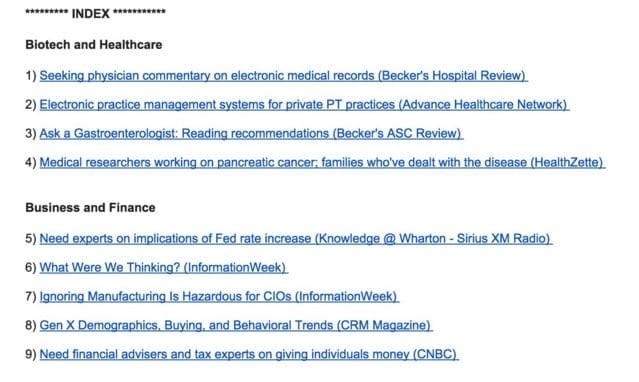
Enter HARO (short for “Help a Reporter Out”), a passive link building method where the opportunities find you.
HARO is a service designed to help journalists find resources for stories they plan to publish in their magazines.
Its base of users includes media outlets such as Mashable, the Wall Street Journal, the New York Times, and Time, just to name a few.
HARO allows journalists to send requests with the subjects they are interested in.
Here’s how it works.
Once you sign up, you will start receiving emails broken down into different categories.
Each request contains the title of the content the newspaper wants to publish and the name of the media outlet.
Browse through the categories to find a topic that is relevant to your niche, and you think you can contribute to with valuable insights.
Once you find something interesting, it’s time to write your pitch.
Keep in mind that these journalists receive a lot of messages, so you need to ensure that yours stands above the noise.
A few short sentences won’t do the trick. Address every question asked in the inquiry in detail if you want to maximize your chances of getting featured.
Don’t forget to include your bio and a link to your website.
If your pitch made the cut, you would receive an email with a link to the article where your input was published.
If you’re extremely busy and don’t have time to sort through your email to look for the best HARO request, then a tool like IFTTT can be of great help.
That way, you’ll receive a notification whenever there’s a request related to your business’s niche.
2. Expert Roundup Posts

One of the most effective link building tips cited by the SEO professionals I talked to was the expert roundup blog post.
As the name suggests, an expert roundup is a type of post that features contributions from different experts.
Simply put, you ask a compelling question and reach out to leaders in your industry to ask for their insights.
One of the reasons expert roundup posts are so efficient in helping you acquire authoritative links is that they generate a lot of traffic.
It makes sense if you think about it. People may not be interested in your opinion about a certain subject, but they sure want to hear what an influencer in your niche thinks about that issue.
And because a roundup is a compilation of valuable insights from experts, people are more likely to share the posts.
All these factors play a vital role in increasing your site’s authority.
Oh, and did I mention that expert roundups are also an excellent opportunity to build a lasting relationship with influencers in your niche?
So how do you go about creating one?
First thing first, you need to make sure that you’re asking the right question.
Think about something that your audience is dying to know more about and the influencers are willing to answer.
Industry leaders receive tons of expert roundup requests, so if your question has already been asked hundreds of times, they are less likely to honor your request.
Go to forums and Facebook groups and read the discussions.
Pay attention to the questions asked on your blog or use keyword research to find the topics your audience is interested in at the moment.
3. Skyscraper Method

You’ve tried everything, from infographics to listicles and video content.
However, in spite of your efforts, you barely manage to get a few clicks per post, let alone backlinks.
Well, have you tried the Skyscraper method?
The Skyscraper technique was created by Brian Dean, a genius marketer, and it works something like this:
Step 1: Find popular topics in your niche
Use sites like Buzzsumo, Open Site Explorer, or just do a quick Google search to find stellar content.
Step 2: Create something even better than the number one result
You found an article that you know your audience will love. Now, it’s time to improve it and make it stand out.
You can do that by making it more comprehensive, turning it into an infographic, and so on.
The idea is to add value to the original post.
Step 3: Reach out to the right people
Outreach is one of the most important parts of the Skyscraper method.
If people don’t know about the new and improved version, then your efforts are in vain.
So after you publish the article, start reaching out to the influencers who linked to or shared the original post.
If people don’t know about the new and improved version, then your efforts are in vain.
So after you publish the article, start reaching out to the influencers who linked to or shared the original post.
Don’t forget to credit the original author both in your blog post and your outreach email.
4. Participate in Interviews and Roundup Posts
In the age of content overload, when people are wary about the way they spend their time online, being perceived as a thought leader is an excellent way to increase your brand credibility and authority.
Not to mention that getting interviewed on news sites, blogs, and podcasts and featured in expert roundups is also an efficient strategy to build natural backlinks.
Unfortunately, most people ignore this method completely.
Sure, you can’t just wait for media outlets and bloggers to reach out to you.
You need to be proactive if you want to maximize your chances of landing an interview or a spot in an expert roundup blog post.
Find a site/blog you would like to be published on and study it: what type of content they publish, are their topics relevant to your audience, and so on.
Then, pitch different discussion ideas that are in line with the platform’s profile and audience.
Once you manage to score an interview, make sure to promote it on your blog and social media.
The more people read it and share it with their network, the higher the chances of getting some authoritative backlinks.
5. Scholarship Link Building
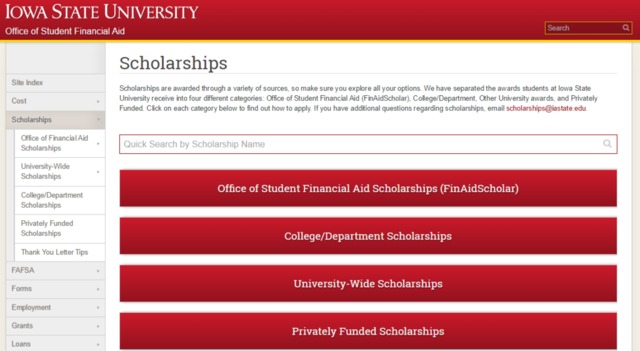
Let me tell you a secret: Google loves .edu backlinks. And it makes perfect sense if you think about it.
Educational institutions are respectable, reliable, and authoritative, so any link coming from them will boost your rankings instantly.
What does it require to get mentioned by an academic institution?
Well, you can offer a scholarship program to students.
Look through a local university’s courses and choose something that is relevant to your business and audience.
For example, if you sell furniture, you can create a scholarship for the interior design section from a local university.
Reach out to the university and present your scholarship program.
They will appreciate your interest in offering financial support to students and feature your proposal together with a link to your website on their Scholarship programs page.
Be careful, though. You can’t just create a sloppy program and call it a day.
For this link building strategy to work, you need to spend enough time establishing the parameters of your scholarship, finding the best educational institutions, and carefully reviewing the applications your receive.
6. Bonus Method: Link Reclamation
Things change quickly on the web.
Websites redesign their pages or completely remove them, which can result in broken links to other sites.
What does all this have to do with you?
Well, if you were mentioned on one of those pages, your link building strategy could suffer.
That’s where link reclamation can come in handy.
Link reclamation is the practice of looking for opportunities on the web where you’ve been mentioned but, for some reason, the author didn’t link to your site.
Or, if they did, the link is broken, or they didn’t use the right URL.
Use tools like Open Site Explorer to look for broken URLs or links that send the readers to a missing page.
Once you have a list, reach out to the webmasters and politely ask them to fix the error.
Conclusion
Link building still plays a vital role in your SEO strategy. But getting links from shady sources is frowned upon by Google.
You need to get creative and look for new ways that can help you maximize your link building efforts.
Hopefully, these tips will get you started on the right track.
Kostas Chiotis, the founder of IrisSignals.com, is a content marketing and blogger outreach specialist. He has worked with top companies in various industries and helped them increase their sales and traffic. His mission is to help businesses grow through the power of content marketing and make the web a better place.
Connect with him on Linkedin, Twitter @IrisSignals and Facebook
The post 5 Winner Link Building Methods Other Than Guest Blogging appeared first on Ninja Outreach.
source
https://ninjaoutreach.com/linkbuilding-guestposting-alternative/
